


One of the more common friendly debates one has this time of year is over what is the best Christmas song.
There are many from which to choose . According to the music data and licensing platform Blokur, there are over 9,000 Christmas songs, not including “seasonal songs” like “Frosty The Snowman” and “Jingle Bells.”
Generally, Bing Crosby’’s “White Christmas” is considered the most popular of these Christmas song, though nowadays Mariah Carey’s “All I Want for Christmas Is You” seems to be wearing that belt.
There are countless other great Christmas songs as well. Some of my favorites are Trans-Siberian Orchestra’s “Christmas Eve/Sarajevo,’ Chuck Berry’s “Run Run Rudolph,” and Darlene Love’s “Christmas (Baby Please Come Home).”
Even Christmas songs not deemed secular have as little to do with the birth of Our Lord and Savior as so-called Christmas movies like “Die Hard” and “Home Alone.” “Silent Night” clearly does, but are few others.
Interestingly, one reason why most of the most popular Christmas songs are either considered seasonal or secular is because so many were written by Jews. A Jewish writer named Johnny Marks in particular wrote the standards wrote “Rudolph the Red-Nosed Reindeer,” “Rockin’ Around the Christmas Tre,” and “A Holly Jolly Christmas.”“It’s the Most Wonderful Time of the Year,” “Let It Snow! Let It Snow! Let It Snow!” and “The Christmas Song (Chestnuts Roasting on an Open Fire)” were also written by Jews.
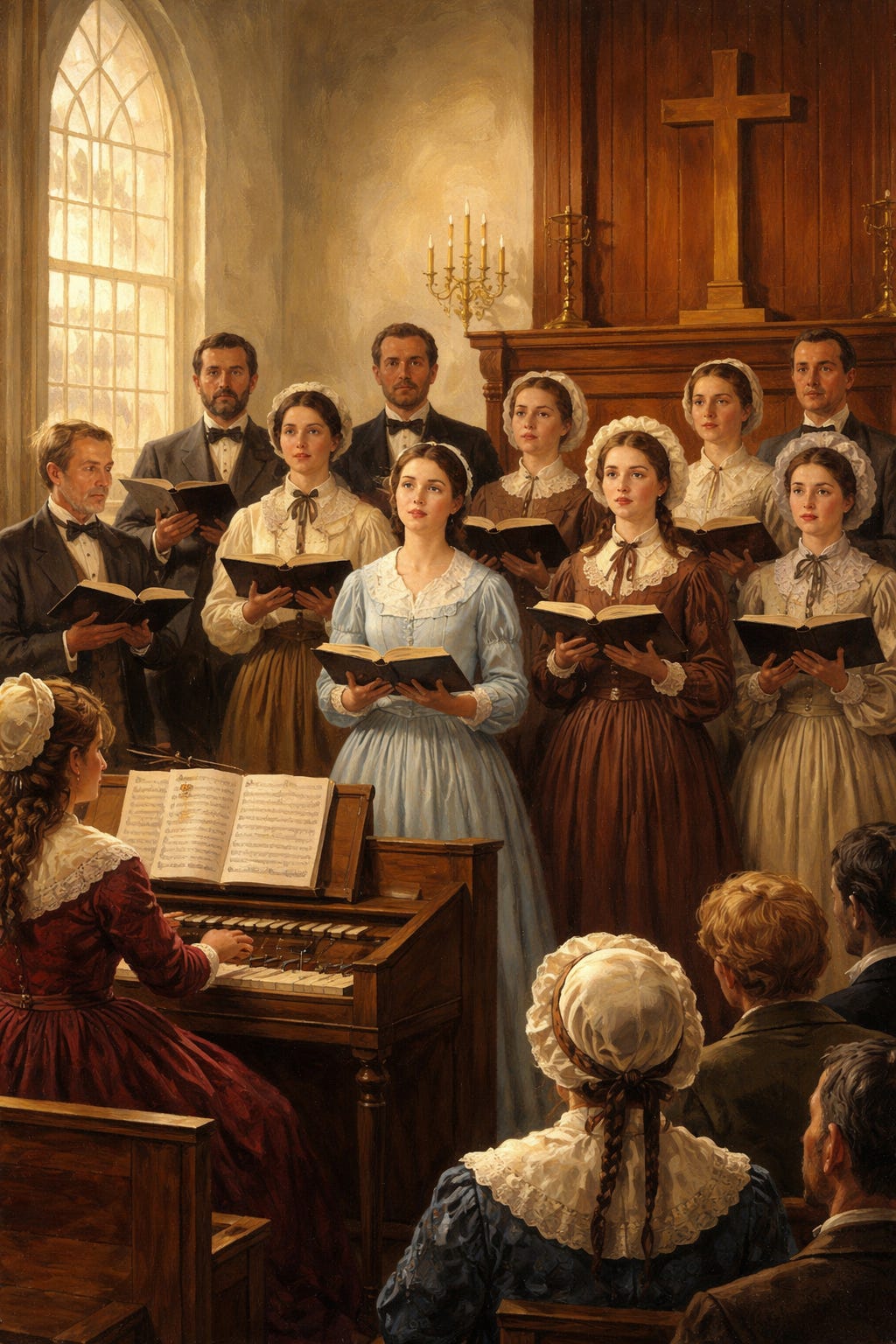
It can be argued that Jews are not the best sources for expressions of Christian piety. However, neither are poets are do not believe in the virgin birth or even in God Himself. Yet one of the songs that does celebrate Christ’s birth is “O Holy Night!” which was based on a 1847 French poem “Minuit, Chrétiens” by Placide Cappeau; an atheist, socialist, and abolitionist.
As described on findmypast.com by Daisy Goddard:
In 1847, the parish priest asked Cappeau to write the words for a Christmas song to be sung by opera singer Emily Laurey, accompanied by the church’s newly renovated organ. The priest suggested Cappeau take his poem to Adolphe Adam, a composer well-known at the time for his ballet Giselle, to write the music. It so happened that Cappeau and Adam had a mutual friend through which Cappeau arranged a meeting, and Adam agreed to write the music.
Despite Cappeau’s atheism he was familiar enough with the Bible to base “Minuit, Chrétiens” on the Bible, specifically Luke 2:8-14:
8 And there were in the same country shepherds abiding in the field, keeping watch over their flock by night.
9 And, lo, the angel of the Lord came upon them, and the glory of the Lord shone round about them: and they were sore afraid.
10 And the angel said unto them, Fear not: for, behold, I bring you good tidings of great joy, which shall be to all people.
11 For unto you is born this day in the city of David a Saviour, which is Christ the Lord.
12 And this shall be a sign unto you; Ye shall find the babe wrapped in swaddling clothes, lying in a manger.
13 And suddenly there was with the angel a multitude of the heavenly host praising God, and saying,
14 Glory to God in the highest, and on earth peace, good will toward men.
In 1855, an American music critic named John Sullivan Dwight translated the carol into the English “O Holy Night” for an American audience. As Delaney Cohen wrote in American Magazine,
In Dwight’s rather liberal translation, the text takes on new life. The French, which would directly translate to “People kneel down, wait for your deliverance,” becomes “Fall on your knees; O hear the angel voices!” The meanings are similar, but Dwight’s rendering evokes the awe-inspiring grandeur of the coming of the Lord. Cappeau’s French lyrics provide a historical and theological recounting of the nativity narrative; Dwight’s English text suffuses the events with rich emotion, placing listeners beneath the radiant star that marked the Savior’s birth.
Besides being a translator, Dwight was also a music critic and a Unitarian minister. Importantly, he, like Cappeau, was an abolitionist. As Cohen mentions, “[Dwight] wrote publicly about his horror that ‘three or four millions of our human brethren [are] in slavery’ and believed that the United States was committing ‘moral suicide.”
This view prompted Dwight to translate Cappeau’s third stanza, which spoke about a “Redeemer” who “sees a brother where there was only a slave,” into an even more powerful, more direct condemnation of slavery:
Truly He taught us to love one another;
His law is love and His Gospel is Peace.
Chains shall He break, for the slave is our brother
And in His name, all oppression shall cease.
Various reports speak to the unpopularity of O Holy Night in the antebellum South, as one might imagine. Dwight’s characterization of their slaves being their chained, oppressed brothers was undeniably controversial:
Because he faithfully translated Cappeau’s anti-slavery sentiments, Dwight’s O Holy Night was unpopular in the South, and one large and influential Southern church convention officially forbade its use in their churches. This ban was formally lifted only within surprisingly recent memory,
O Holy Night is not often listed among the songs slave sang when yearning to be free, like “Nobody Knows the Trouble I’ve Seen,” “Swing Low, Sweet Chariot,” and “Go Down, Moses.” Yet the song “gained fast favor among Northerners during the Civil War.”
The stanza can however be heard in some versions. It can heard here in my favorite version my favorite version from Celtic Woman, for example. However, it is s not uncommon to find Dwight’s stanza muted, or excluded altogether.
Many traditional songs are routinely shortened, including Silent Night and Woody Guthrie’s This Land Is Your Land. Versions of O Holy Night from Mariah Carey, Jennifer Hudson, Celine Dion, and Andy Williams sadly eschew Dwight’s contribution.
That’s a shame. Although the slavery both familiar and despised by Cappeau and Dwight is long gone, slavery itself still exists today. People are being forced to work to pay off impossible debts by human smugglers. Girls are being forced into prostitution. Millions have fallen into drug addiction.
It would serve us well to remember that these slaves are our brothers as well.